
Expert Advice
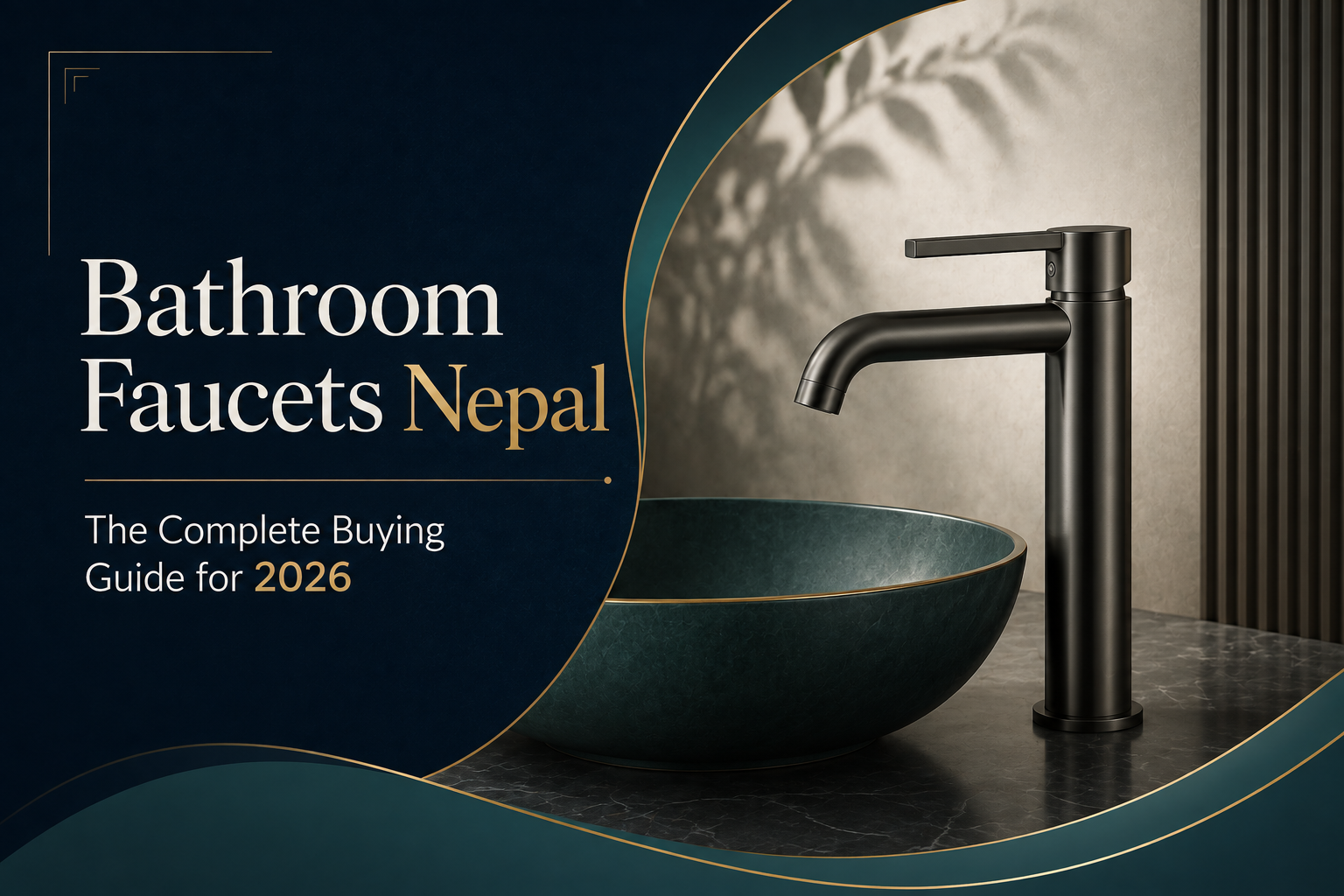
Bathroom Faucets Nepal — The Complete Buying Guide for 2026
Direct answer: Bathroom faucets in Nepal fall into four categories — basin mixers, wall mixers, bath fillers, and exposed shower taps — each suited to a different installation and use case. Jaquar’s ceramic disc cartridges, rated for 500,000-plus cycles, are the biggest factor in long-term reliability, more than finish or brand tier alone.
A bathroom faucet in Nepal isn’t one product, it’s several, and confusing the categories before tiling starts is one of the most common and most expensive mistakes on a renovation. Basin mixers, wall mixers, bath fillers, and exposed shower taps solve genuinely different problems, and swapping one for another after the walls are finished usually means breaking back into them, which is exactly the kind of rework a little planning avoids entirely.
The four faucet categories, explained
Basin mixers sit on the counter or sink deck and are the highest-volume fitting in any bathroom, controlling both temperature and flow from a single point, covered in more depth in our Jaquar basin mixer guide. Wall mixers are built into the wall behind the basin or bath, feeding a spout that projects outward, and need to be planned before tiling since the valve body sits inside the cavity — retrofitting one later means opening the wall. Bath fillers are the higher-flow mixers built specifically for filling a tub quickly rather than washing hands, usually deck-mounted or wall-mounted at the tub edge, and are sized differently from a basin mixer even when they look superficially similar. Exposed shower taps sit outside the wall entirely, feeding a riser, hand shower, or rain shower, and are the easiest of the four categories to retrofit into an existing bathroom without structural work.
Single-lever vs three-hole
Single-lever basin mixers dominate Nepal’s current market for a straightforward reason: one handle controls both temperature and flow, and installation is a single hole through the counter, which suits both new construction and renovation work equally well. Three-hole sets, with separate hot and cold handles positioned either side of the spout, suit a more traditional or heritage-style bathroom, but they need three drilled points instead of one and more counter depth to function properly, which rules them out for compact vanities. The full range across both formats sits in our Jaquar bath fittings guide and the manufacturer’s own faucet collection.
Finish and what it actually changes
Chrome remains the practical default, hiding water spots better than any other finish and costing the least to maintain over years of daily use. Matte black and brushed gold read as more current and deliberate but show water spots faster in Kathmandu’s hard water unless wiped down regularly, a genuine maintenance tradeoff rather than a purely aesthetic one. None of this affects how the faucet performs day to day, only how it looks and how much upkeep it demands. What sits underneath that finish, brass or stainless steel, is a separate question covered fully in our brass vs stainless steel comparison.
What actually decides longevity
The cartridge inside the faucet, not the finish on the outside, determines how long it genuinely lasts. Jaquar’s faucets use ceramic disc cartridges rated for 500,000-plus operation cycles, a figure that matters considerably more in Kathmandu’s hard water than any single design decision. A faucet with a weak cartridge and a premium finish will start dripping within a couple of years regardless of how it looks; a well-built cartridge under a basic chrome finish will outlast it by a wide margin every time.
Choosing by room type
A powder room or guest bath sees light, occasional use and can reasonably prioritize finish over cartridge grade. A family bathroom used multiple times daily needs a cartridge built for volume, which points toward the mid-to-premium Jaquar tier rather than entry-level Essco. A hotel corridor bathroom, cycling through different guests continuously, needs the most durable option available regardless of finish trend, since replacement cost multiplied across dozens of rooms adds up fast — a specification approach covered in our hotel bathroom fittings guide.
Buying with a warranty that actually holds
Faucets bought through marketplaces or unverified resellers frequently arrive without the documentation Jaquar recognizes for a warranty claim in Nepal, a risk explained in full in how to buy genuine Jaquar fittings safely. Shubha Vani International’s 250+ dealer network covers every province in Nepal, so a genuine, warrantied faucet is rarely more than a short drive away from anywhere in the country.
Frequently asked questions
What’s the difference between a basin mixer and a wall mixer?
A basin mixer sits on the counter or sink deck; a wall mixer is built into the wall with only the spout projecting out, and must be planned before tiling since the valve sits inside the wall cavity.
Is a single-lever or three-hole faucet better?
Single-lever suits most modern bathrooms and compact vanities; three-hole suits traditional design with more available counter depth. Neither is objectively better, they suit different layouts.
Does finish affect how long a faucet lasts?
Not directly. The cartridge inside determines lifespan; finish affects only appearance and how often the faucet needs cleaning to look its best.
How many cycles does a Jaquar cartridge last?
Jaquar’s ceramic disc cartridges are rated for 500,000-plus operation cycles, well beyond typical residential use over many years.
Where can I buy a genuine, warrantied faucet in Nepal?
Through any of Shubha Vani International’s 250+ authorized dealers nationwide, or the Jorpati showroom in Kathmandu directly.
Key facts
- Four faucet categories: basin mixers, wall mixers, bath fillers, exposed shower taps
- Cartridge quality, not finish, is the primary driver of faucet lifespan
- Jaquar ceramic disc cartridges are rated for 500,000+ cycles
- Genuine warranty coverage requires purchase through Shubha Vani’s authorized network