
Expert Advice
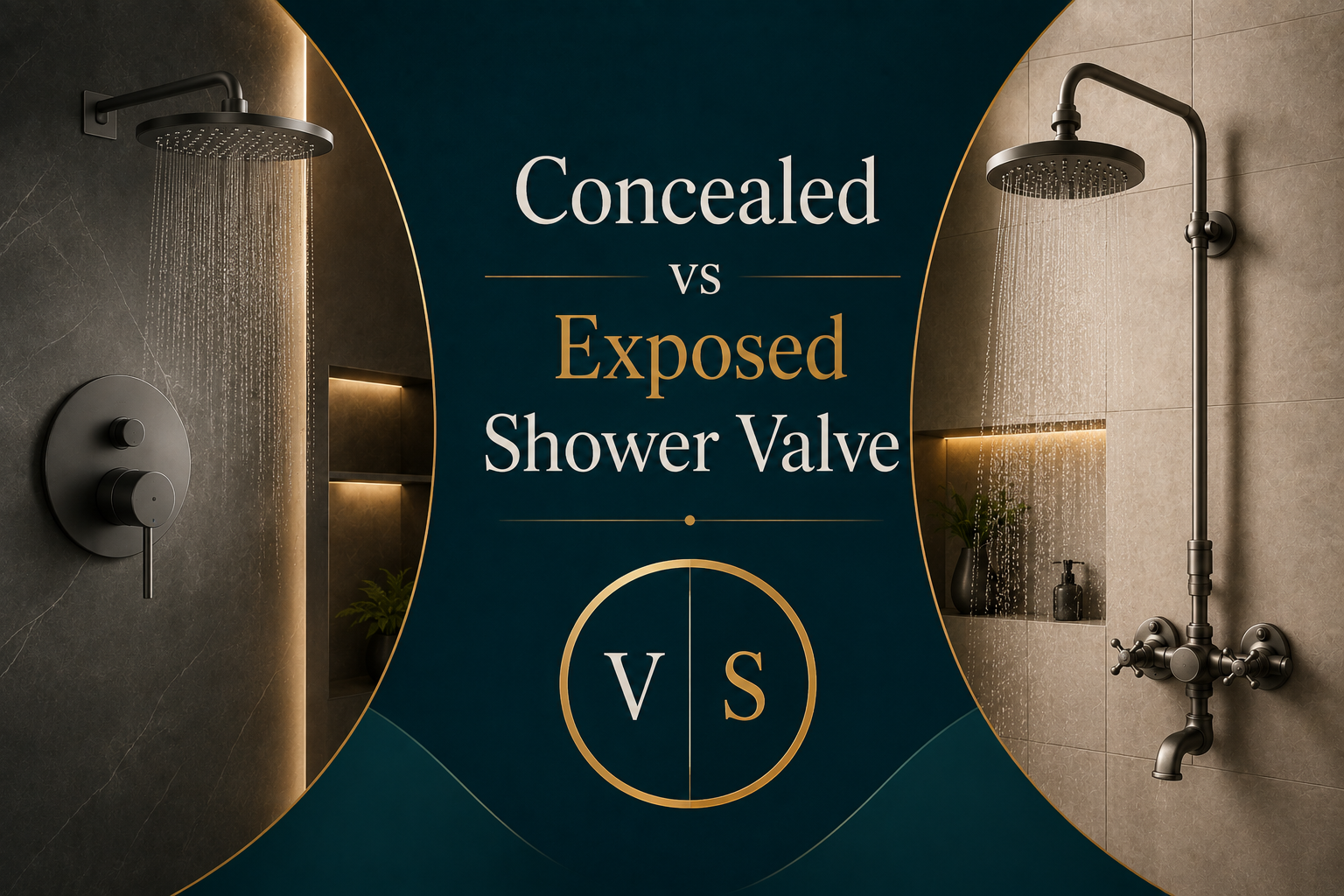
Concealed vs Exposed Shower Valve — Which Is Right for a Nepal Bathroom?
Direct answer: Concealed shower valves hide inside the wall for a cleaner look and suit new builds or full renovations; exposed valves mount on the surface, cost less to install, and suit renovations where wall access is limited. Neither is objectively better — the right choice depends on wall structure, budget, and whether the project is a new build or a partial renovation.
A shower valve controls the mix of hot and cold water that reaches the head, separate from the rain shower or panel it feeds, and the decision between a concealed and an exposed valve affects your budget, your renovation timeline, and how easy the system is to service years down the line, well beyond just how the wall looks on installation day.
How each system works
A concealed valve is installed inside the wall cavity during construction or renovation, with only the control plate, handle, and spout visible from the outside; the plumbing and mechanical components stay entirely hidden behind the finished surface. An exposed valve mounts on the surface of the wall instead, with the pipework, risers, and handle all visible and connected via chrome or brushed metal tubing running along the outside of the tile.
Concealed: the case for it
A clean, minimalist wall with no visible plumbing is the main draw, and it’s why concealed valves are now the default in premium hotel and residential bathrooms across Kathmandu, part of the broader shift covered in our luxury bathroom Nepal guide. Concealed setups also work better in smaller bathrooms, since there’s no external pipework taking up shower enclosure space that a compact layout can’t spare. The tradeoff is upfront planning: the valve has to go in before tiling, and any future repair beyond the cartridge itself can mean removing tiles to reach the body, which is a genuinely more disruptive fix than an exposed system requires.
Exposed: the case for it
No wall-chasing required, faster and less invasive installation, and every working part stays accessible for future repair without touching a single tile. For renovation projects where breaking into finished walls isn’t practical, or budget-conscious projects where labor cost matters as much as product cost, exposed is the lower-risk, lower-cost choice by a meaningful margin. The visible pipework does need more regular cleaning to avoid limescale buildup showing on the surface, a maintenance point worth weighing against the installation savings.
Cost difference in Nepal specifically
Concealed systems cost more to fit, both in the product itself, carrier frame, longer in-wall components, and in the labor, wall chasing, tiling coordination, while exposed systems save on both fronts — the full pricing breakdown is in our shower price guide. For a full renovation where walls are already open for other work, the incremental cost of going concealed is smaller than retrofitting concealed into a finished bathroom later, which is significantly more disruptive and expensive to do as a standalone job.
The Nepal climate factor
Kathmandu’s monsoon humidity affects both systems, but concealed valves benefit more from quality anti-condensation design, detailed in our Jaquar bath fittings guide, since any moisture issue inside the wall cavity is harder to spot early than a problem on an exposed, visible surface. Hard water affects exposed systems more visibly, since mineral deposits show on external pipework faster than on a hidden concealed valve body. Thermostatic versions, available in either configuration, hold temperature steady through the pressure swings common across Nepal’s variable municipal and tank-fed supply.
Which to choose
New builds and full renovations with wall access already open should default to concealed for the cleaner result and easier long-term cleaning. Partial renovations, budget-conscious projects, and any bathroom where wall structure can’t be altered should go exposed without hesitation, since neither option is objectively better, only better suited to a specific wall and budget combination.
For a recommendation specific to your wall type and renovation scope, the team at Shubha Vani International can walk through both options at the Jorpati showroom. Contact shubhavani.com/contact-us or browse the range at shubhavani.com/catalog.
Frequently asked questions
Which is cheaper, concealed or exposed shower valves?
Exposed is generally cheaper, both in product cost and installation labor, since it requires no wall-chasing or carrier frame.
Can I retrofit a concealed valve into an existing bathroom?
Yes, but it requires breaking into finished walls, which is significantly more disruptive and costly than installing it during original construction or a full renovation.
Which option is better for a small bathroom?
Concealed, since there’s no external pipework taking up limited shower enclosure space.
Do concealed valves need more maintenance?
Not more maintenance overall, but internal repairs beyond the cartridge may require tile access, whereas exposed valves are fully accessible without touching tiles.
Does Nepal’s monsoon climate affect the choice?
It affects both, but concealed systems need quality anti-condensation lining to prevent moisture issues inside the wall cavity going unnoticed.
Key facts
- Concealed valves hide in the wall; exposed valves mount on the surface
- Concealed costs more to install but gives a cleaner, more minimalist result
- Exposed is easier and cheaper to service since all parts remain accessible
- Retrofitting concealed into an existing wall is more disruptive than planning for it upfront