Expert Advice
Best Shower Options for Low Water Pressure Areas in Nepal
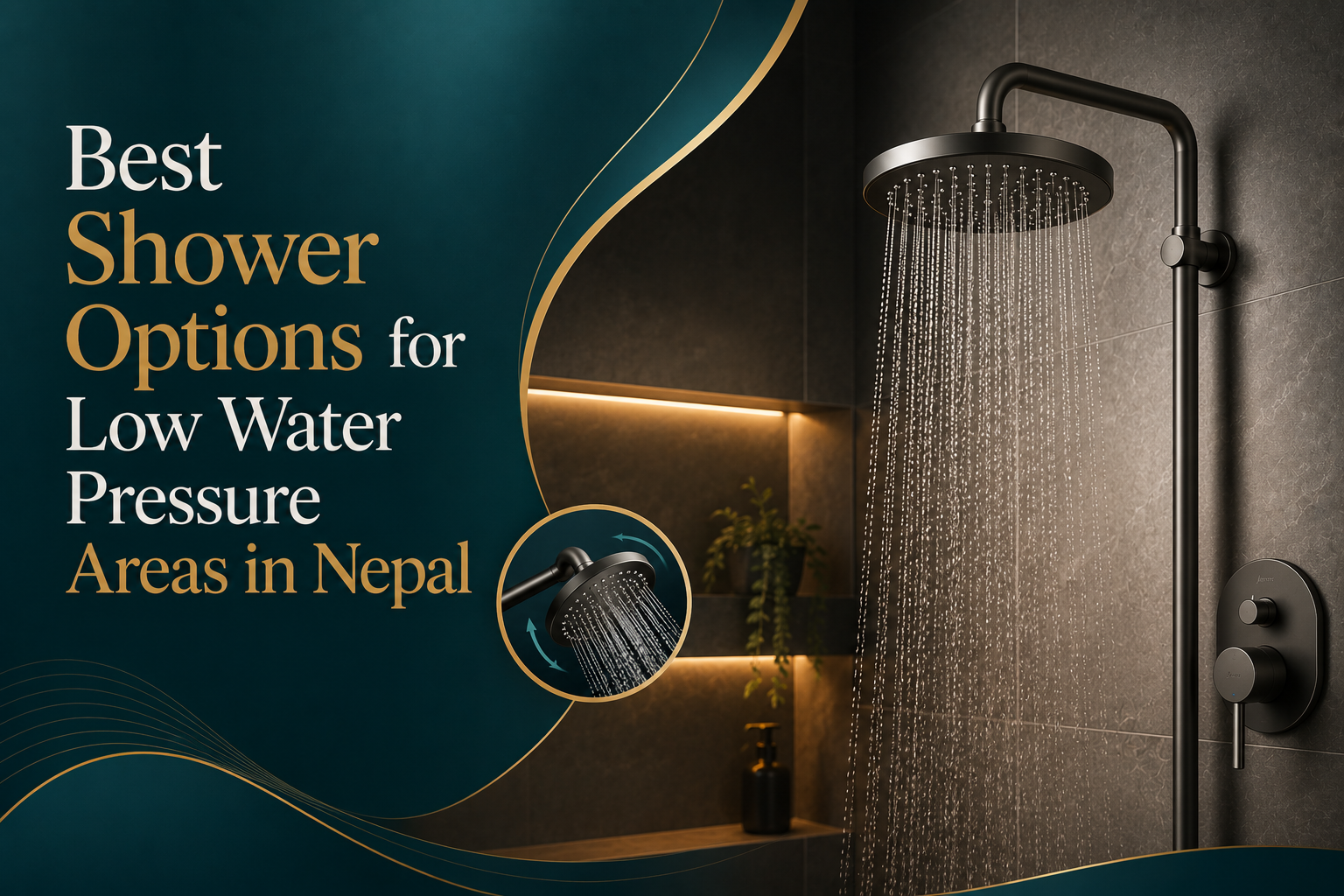
Direct answer: For low water pressure in Nepal, a smaller-diameter or handheld shower head with booster nozzle technology typically performs better than a large rain shower, which spreads the same water volume over a wider area and feels weaker. Overhead tank height and pipe diameter often matter more than the fixture itself.
Low water pressure is one of the most common bathroom complaints in Nepal, and the fix isn’t always a booster pump. Often it’s choosing a shower designed to perform well at lower pressure in the first place, since not every fixture is built the same way underneath a similar-looking spray head.
Why this is such a common problem in Nepal
Upper-floor apartments on shared risers, homes running entirely on overhead tank gravity feed rather than municipal mains pressure, and areas with inconsistent supply from the utility all contribute to weak shower performance, and the underlying cause is rarely the same from one building to the next. Diagnosing which of these applies before choosing a fixture saves money on a shower that was never going to solve the actual problem, since a premium head can’t compensate for a structural pressure issue elsewhere in the building.
How shower head design affects perceived pressure
A wide, flat rain shower head spreads water across a larger surface area, which can feel noticeably weaker at low pressure than a smaller, more concentrated head delivering the exact same total flow rate. For genuinely low-pressure homes, a handheld or smaller-diameter fixed head, paired with a pressure-optimized nozzle design, delivers a more consistent, satisfying feel than a large rain shower will, even though the rain shower looks more premium sitting in a showroom display.
Booster nozzle technology explained
Some shower systems use nozzle designs engineered specifically to maintain spray consistency across variable supply pressure, restricting and shaping the flow at the nozzle level rather than relying purely on incoming pressure to create a satisfying spray. This matters considerably more in Nepal than in countries with uniform municipal water pressure, and it’s worth asking about directly when specifying a shower, since it isn’t always obvious from a showroom display which models include it and which are built for high-pressure conditions instead. This is covered in more detail in our Jaquar bath fittings guide.
Beyond the shower head — the whole system matters
An overhead tank positioned with sufficient height above the shower gives gravity-fed pressure a real, physical boost regardless of which fixture is installed underneath it, and this is often the single biggest factor in a Nepal home’s overall shower performance, bigger than fixture choice alone. Pipe diameter between the tank and the shower affects flow more than most homeowners expect too; a narrow pipe run will bottleneck even a good tank height and undo any benefit from a well-chosen fixture. Where these structural factors can’t easily be changed, a small booster pump dedicated to the shower line is a more reliable fix than repeatedly swapping fixtures hoping for a better result.
Concealed vs exposed valve choice under low pressure
Whether the mixing valve is concealed or exposed doesn’t directly affect pressure, but a thermostatic valve, in either configuration, helps maintain consistent temperature even as pressure fluctuates through the day, which is a related and equally common frustration in low-pressure homes where a shower runs cold the moment someone else in the building turns on a tap.
What to ask for when specifying
Tell the showroom your actual supply setup, tank height, pipe diameter if known, and whether the building has had pressure complaints elsewhere, rather than simply asking for “a good shower.” That context changes the recommendation meaningfully, and specifying blind is the most common reason a shower upgrade doesn’t end up fixing the pressure problem it was bought to solve in the first place.
For a pressure-specific recommendation, Shubha Vani’s team can advise based on your building’s supply setup at the Jorpati showroom. Reach out at shubhavani.com/contact-us or see the full shower range at shubhavani.com/catalog.
Frequently asked questions
What type of shower head works best for low pressure?
A smaller-diameter or handheld head with booster nozzle technology, rather than a wide rain shower head that spreads the same flow thinner.
Does overhead tank height affect shower pressure?
Yes, significantly. Greater height above the shower increases gravity-fed pressure regardless of which fixture is installed.
Should I get a booster pump instead of changing the shower head?
If tank height and pipe diameter can’t be changed structurally, a dedicated booster pump on the shower line is often more reliable than repeated fixture swaps.
Does pipe diameter really make a difference?
Yes. A narrow pipe run can bottleneck flow even with good tank height, undoing the benefit of an otherwise well-chosen fixture.
Do thermostatic valves help with low pressure specifically?
They don’t increase pressure, but they hold temperature steady when pressure fluctuates, which is a related and common complaint in low-pressure Nepal homes.
Key facts
- Rain shower heads feel weaker under low pressure than smaller, concentrated heads at the same flow rate
- Booster nozzle technology maintains spray consistency across variable supply pressure
- Overhead tank height and pipe diameter often matter more than fixture choice alone
- Thermostatic valves address temperature consistency, not pressure, under fluctuating supply