
Expert Advice
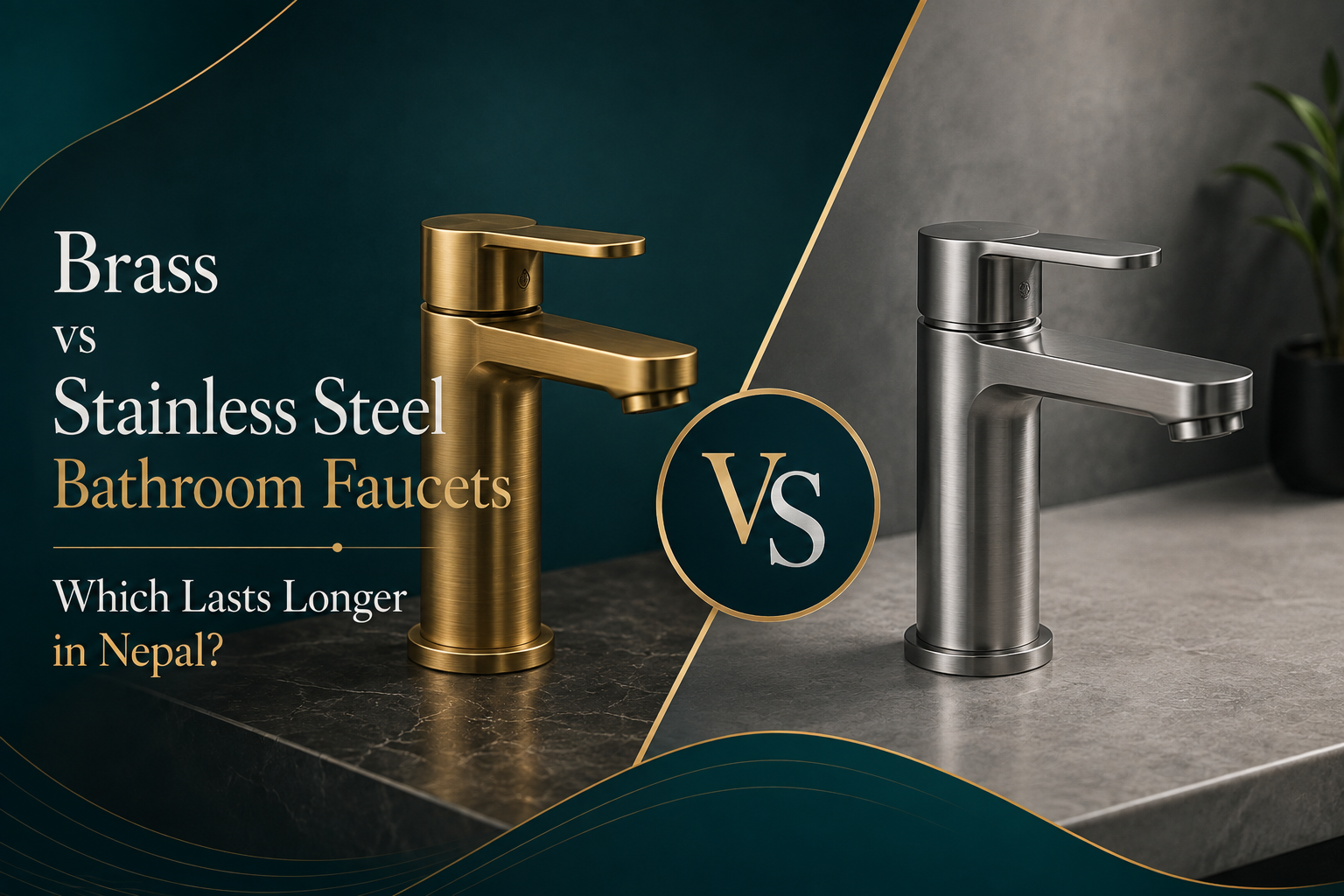
Brass vs Stainless Steel Bathroom Faucets — Which Lasts Longer in Nepal?
Direct answer: Brass takes plating more durably and remains the more proven base metal for premium finishes; stainless steel resists corrosion natively and doesn’t expose a different-colored base metal when scratched. In Kathmandu’s hard water, cartridge quality matters more to faucet lifespan than the choice between the two base metals.
The finish visible on a faucet, chrome, matte black, brushed gold, is a plating layer sitting on top of a base metal underneath. That base metal, almost always brass or stainless steel, determines how the faucet actually holds up over years of daily use, particularly against hard water, and it’s a decision most buyers are never asked about at the point of sale, even though it affects the fixture’s entire working life. The finish options themselves are covered separately in our bathroom faucets Nepal guide.
Brass
The traditional standard for bathroom faucets for good reason. Brass resists corrosion well on its own, and it takes plating, chrome, matte black, brushed gold, more evenly and more durably than most alternative base metals, which is part of why premium finishes across the Jaquar and Artize ranges are still built on brass bodies almost universally. It’s heavier than stainless steel, which often reads as higher quality at the point of sale even before the faucet is turned on, and it machines precisely, which matters for the tight internal channels a mixer valve depends on to function smoothly for years without leaking at the joints.
Stainless steel
Increasingly used in mid-range fittings, stainless steel resists corrosion natively rather than depending entirely on an intact plating layer for protection, which means a minor surface scratch doesn’t expose a different-colored base metal the way a worn brass-and-chrome faucet eventually can after years of use. It’s typically lighter, which some buyers read as less premium even though the functional performance difference is smaller than the weight difference alone suggests, and it holds up well against certain hard water mineral reactions that affect brass differently over time.
How each performs against Kathmandu’s hard water
Hard water accelerates mineral buildup on either material, but in practice the visible difference shows up mainly in the plating and the cartridge, not the base metal underneath. A well-plated brass faucet and a well-made stainless steel faucet will both develop similar surface deposits over time if neither is wiped down regularly, so material choice matters less here than most buyers assume walking into the decision. Regular maintenance, covered in general terms across our Jaquar bath fittings guide, affects appearance more than the underlying metal choice does.
Is weight a reliable quality signal?
Not entirely on its own. A heavier faucet often does indicate a solid brass body, which is a reasonable first impression in a showroom, but weight alone doesn’t tell you anything about the cartridge quality inside, which is the component that actually fails first in almost every real-world case regardless of what the body is made from. Judging a faucet by heft is a fine starting point, not a substitute for asking what cartridge it’s built around.
What actually matters more than the material
Jaquar’s ceramic disc cartridges, rated for 500,000-plus operation cycles, are a considerably more reliable predictor of how long a faucet will perform well than brass versus stainless steel alone. A faucet with a strong cartridge and a stainless steel body will outlast a weak-cartridge brass faucet, and the reverse is just as true, which is why the material question, while genuinely worth understanding, shouldn’t be the only question asked before buying.
Making the choice for your project
For a premium finish that needs to look flawless for years, brass remains the more proven base metal. For a mid-range project prioritizing corrosion resistance and a lighter fixture, stainless steel is a genuinely solid choice, not a compromise on quality. Either way, ask about the cartridge before you ask about the metal, since that’s the component doing most of the long-term work.
For a specific recommendation based on finish, budget tier, and expected use, Shubha Vani’s showroom team can walk through both material options in person. Browse the range at shubhavani.com/catalog or contact the team at shubhavani.com/contact-us.
Frequently asked questions
Is brass or stainless steel better for bathroom faucets?
Neither is objectively better. Brass takes plating more durably and suits premium finishes; stainless steel resists corrosion natively and suits mid-range fittings well.
Does hard water affect brass and stainless steel differently?
Both develop mineral deposits from hard water over time; the visible difference shows up mainly in the plating and cartridge rather than the base metal itself.
Is a heavier faucet always better quality?
Weight often indicates a solid brass body, which is a reasonable signal, but it doesn’t reflect cartridge quality, which matters more for long-term performance.
What matters more than the base metal for faucet lifespan?
The cartridge. Jaquar’s ceramic disc cartridges, rated for 500,000+ cycles, are the more reliable predictor of how long a faucet lasts.
Which should I choose for a premium finish like brushed gold?
Brass, since it takes and holds premium plating more evenly and durably over time than stainless steel does.
Key facts
- Brass takes plating more durably; stainless steel resists corrosion without relying on plating
- Hard water affects the plating and cartridge more visibly than the base metal itself
- Cartridge quality is a more reliable lifespan predictor than brass vs stainless steel
- Jaquar ceramic disc cartridges are rated for 500,000+ operation cycles regardless of base metal